Recipe No
1117
pasta sauce
Adapted
2026
Wild Boar Ragù Sous Vide (Ragù di Cinghiale)
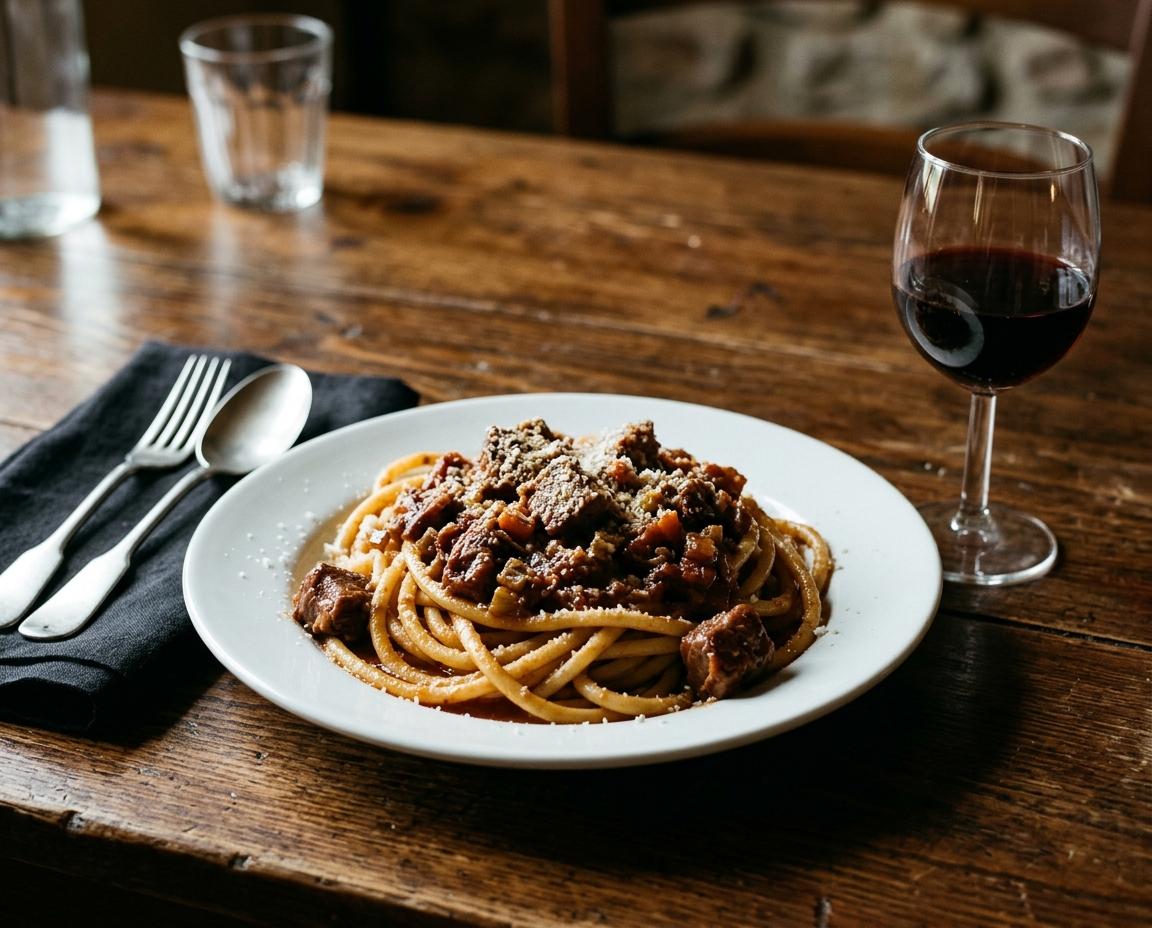
Ragù di cinghiale is a celebrated Tuscan and Umbrian pasta sauce of wild boar and tomatoes, traditionally served over sturdy long pasta such as pappardelle or pici. This sous-vide version uses cheeks. They are browned whole for flavor and then cut into morsels, so the meat stays tender and is not cooked through before the long sous-vide cook. Because a vacuum-sealed bag allows no reduction, the tomato sauce is reduced first and only then cooked sous-vide with the meat. The sauce takes about as long to reduce as a traditional ragù, and the sous-vide cooking adds , but the result is worth it. The cooked ragù keeps well in the refrigerator or freezer, so the recipe is written as a triple batch.
While we love Stefan’s version of this dish, it is impossible to get wild boar in some countries; Australia is one of them. There’s probably no substitute for the flavour, but pigs cheeks are the obvious substitute.
Based on stefangourmet.com
- Time
-
Prep
Total
- Difficulty
moderate
- Yield
-
12–18 servings
Weight3126 g
Processes
-
Wild boar or pig cheeks1500 g
-
Olive oil
-
01Heat a generous amount of olive oil in a large wide frying pan. Add the cheeks. If they don’t fit in a single layer, brown them in batches.
-
02Brown the cheeks on all sides over high heat.
-
03Take the cheeks out of the pan and set aside to cool.
-
04There will now be a lot of flavorful browned bits stuck to the pan. We want to include those into our ragù.
-
Carrot, minced (1 cup)150 g
-
Celery, minced (1 cup)150 g
-
Onion, minced (1 cup)150 g
-
Garlic (3 cloves)9 g
-
Salt and freshly ground black pepperto taste
-
05Add carrot, onion, and celery, and 3 minced garlic cloves. I use the food processor to mince this. Season with salt so the vegetables will release some of their water.
-
06Cook over medium high heat, stirring with a wooden spatula and scraping the bottom to get all the browned bits. The water released by the vegetables helps with this.
-
07Keep stirring until the vegetables are starting to brown.
-
Full-bodied red wine1 (375 ml)370 g
-
08Add 375 ml / 1⅓ cup + 4 tbsp (½ bottle) of red wine.
-
09Bring to a boil, then reduce to a simmer.
-
10Simmer uncovered until the wine has been reduced by half, about .
-
Peeled tomatoes2 (3 cans)400 g
-
11Puree 3 cans of peeled tomatoes in the food processor, then add them to the ragù and stir to incorporate.
-
Bay leaves (2)1 g
-
Fresh parsley (2 sprigs)2 g
-
Fresh sage2 sprigs
-
Fresh rosemary2 sprigs
-
Juniper berries (3)4.1 g
-
12Make two bouquet garni by binding together a bay leaf with sprigs of parsley, sage, and rosemary, and add them to the pan. Add 3 juniper berries as well.
-
13Bring to a boil, then reduce to a simmer, and cook uncovered for about an hour.
-
14Meanwhile, cut the cheeks into slices and then into bite-size morsels. The meat will still be raw on the inside.
-
15Allow the morsels to cool in the refrigerator.
-
16A lot of juices will leak out of the browned meat and collect on the plate. Add these juices to the sauce, as we don’t want to lose any flavor.
-
Milk (375 ml)390 g
-
17After an hour of simmering, add milk and stir to incorporate.
-
18Bring back to a simmer, and simmer for about half an hour longer, or until the sauce is nice and thick.
-
19Fish out the two bouquets garni and the three juniper berries.
-
20When using a chamber vacuum sealer, allow the sauce to cool to room temperature before you continue.
-
21Add the meat to the sauce and stir to incorporate.
-
22Vacuum seal the ragù in portions.
-
23Cook sous-vide for at 62°C / 144°F.
-
24After the of sous-vide cooking, you can either continue to serve the sauce over pasta right away, or chill and store the sauce for later use.3
-
25The meat will have released juices during the cooking process, so the ragù will be too thin. Strain the liquid part of the ragù into a frying pan. Reserve the solid part.
-
26Bring this to a boil, and simmer this to reduce while you boil the pasta.
-
27When the liquids have reduced to your liking, add the meat and allow to warm through over low heat.
-
28When the pasta is cooked, drain it, and add it to the sauce. In this case I used bucatini because I didn’t have pici or pappardelle.
-
29Toss to mix.
-
30Serve on preheated plates. You could add grated parmigiano or pecorino if you like.
Footnotes
- Preferably Italian sangiovese (Chianti or Rosso di Montalcino)
- 400 g / 14 oz each
- For later use, submerge the bags in water with ice cubs until they have cooled off, and then refrigerate or freeze them. Before using, heat them back up in the sous-vide for at 62°C / 144°F before continuing.
Drink pairings
Ragù di cinghiale is great with a medium-bodied red from Tuscany or Umbria, such as Chianti Classico, Rosso di Montalcino, or Rosso di Montefalco. (A full-bodied red such as Brunello di Montalcino or Sagrantino di Montefalco would probably be too heavy.) The pasta ‘dilutes’ the robust flavor of the ragù and thus the wine should not be as robust as you might think.
Finished recipe
Categorisation
- Type
- pasta sauce
- Meal
- main course
- Cuisine
- italian
- Tags
- boar cheeks bouquet garni freezer-friendly juniper make ahead ragù red wine sous vide tuscany umbria wild boar